 ENG
 INA
Bridging Academia and Industry, DPPM Unud Hosts the 13th Senastek 2026
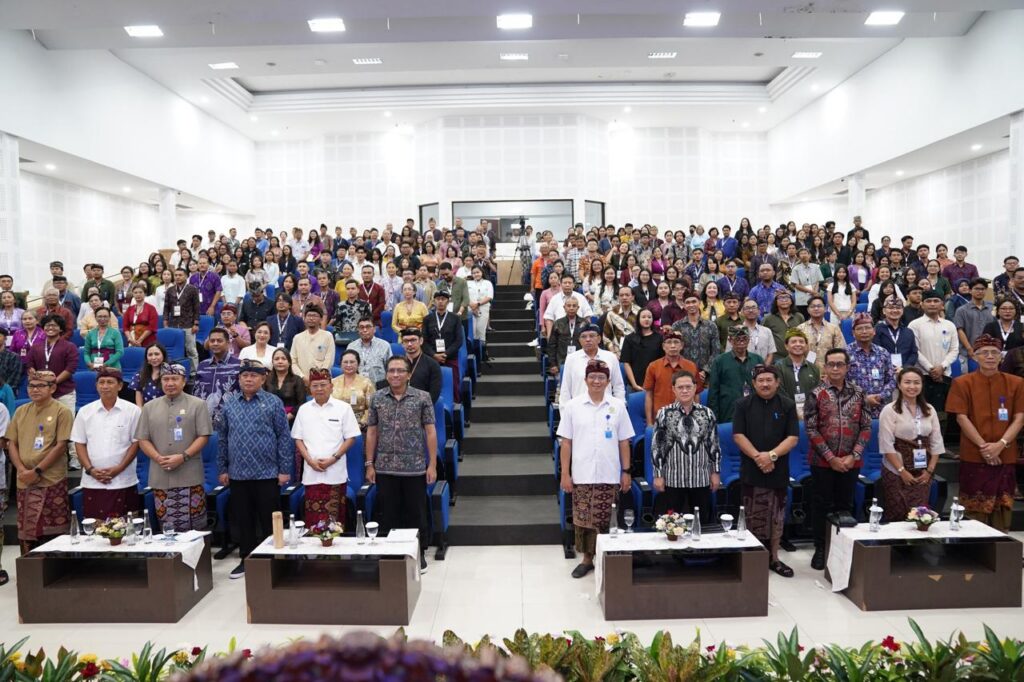
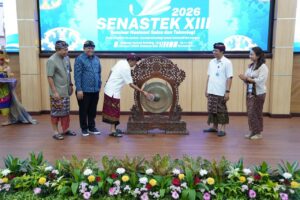
Bukit Jimbaran – Udayana University (Unud), through its Directorate of Research and Community Service (DPPM), has once again organized its annual scientific forum, the 13th National Seminar on Science and Technology (Senastek) 2026. Carrying the theme “From Research to Market: Technological Innovation for National Self-Reliance,” the two-day event took place on November 19–20, 2026, at the Lecture Building Auditorium, Bukit Jimbaran Campus.
The enthusiasm of the academic community and practitioners was reflected in the attendance of 1,072 participants from both within and outside Udayana University. The series of events was comprehensively designed to bridge academia with industry needs, featuring:
- Main seminar sessions
- Presentations of research and community service outcomes
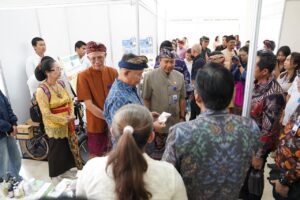
- Innovation expo
- Strategic discussions with government and industry
- Business pitching
- Downstreaming and intellectual property (IP) clinics
The Rector of Udayana University, Prof. Ir. I Ketut Sudarsana, S.T., Ph.D., emphasized in his remarks that university research outputs must not stop merely at scientific publications. Research must transform into technological innovations, downstream products, policy recommendations, and concrete solutions for society. He also encouraged strengthening collaboration across disciplines, faculties, and institutions to address national development challenges.
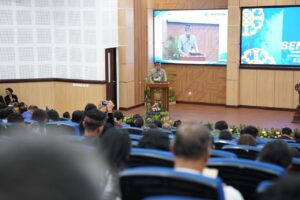
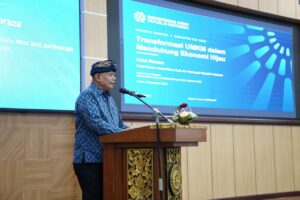
Attending as the keynote speaker, the Deputy Minister of Micro, Small, and Medium Enterprises (MSMEs) of the Republic of Indonesia, Helvi Moraza, delivered a presentation titled “MSME Transformation in Supporting the Green Economy.” He highlighted the crucial role of universities in boosting MSME competitiveness through applied research, appropriate technology, and continuous mentoring.
“The measure of a great piece of research is not how many times it is cited, but how many MSMEs grow because of it,” Helvi asserted.
According to him, Bali holds vast potential to develop green tourism and wellness sectors, such as local food-based culinary products, natural-ingredient cosmetics, as well as crafts and fashion utilizing natural dyes.
Echoing this sentiment, the Governor of Bali, I Wayan Koster, underscored the importance of implementing the Kerthi Bali economic concept, which is harmonious with nature, environmentally friendly, and rooted in local wisdom and resources so that Bali’s economy remains self-reliant and independent of external supplies.
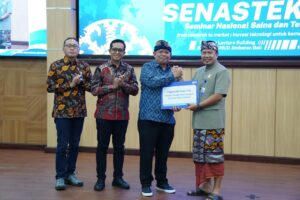
As a tangible manifestation of community service and commitment to a green campus, the 13th Senastek was also coupled with the launch of a source-based waste management program through Teba Modern (modern composting pits). A total of 52 teba modern units have been prepared across 13 faculties and the postgraduate program at the Bukit Jimbaran and Denpasar campuses, supported by the handover of plastic waste processing equipment from Bank Rakyat Indonesia (BRI) through the BRI Peduli TJSL (Social and Environmental Responsibility) program.
Through the organization of the 13th Senastek, DPPM Udayana University reaffirms its commitment to continuously building a collaborative, productive research and community service ecosystem that delivers direct impact on economic self-reliance and societal development.
Universitas Udayana